
Plenary Talks
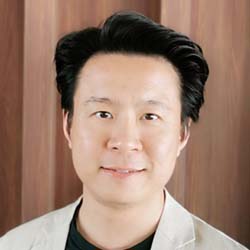
Professor Li Chen
School of Electronics & Information Engineering,
Sun Yat-Sen University, China
Title: Algebra Remains a Cradle for Improving Codes
Abstract: The success of modern codes demonstrates the importance of probabilistic decoding which is a tunnel of utilizing soft information for data recovery. It can overshadow the role of conventional algebra such as minimum distance of a code. However, probabilistic decoding is effective when codeword length is large. Short-to-medium length (SML) codes may play an important role for scenarios that demand both high reliability and low latency or even power consumption. For SML codes, algebraic codes and structures are important for gaining error-correction competency. This talk will show grouping algebraic component codes through an algebraic structure enables interplay between their decoding, compensating their naturally small minimum distances. Two cases in recent coding practice will be shown, U-UV codes and GII codes. U-UV codes couple component codes in Plotkin structure. Empowered by soft decoding, they can be useful for 6G networks. GII codes visualize linear combinations of component codes in a nesting codebook paradigm in tackling richer error patterns. They can be useful for scenarios with scarce soft information, such as optical and chip communications.
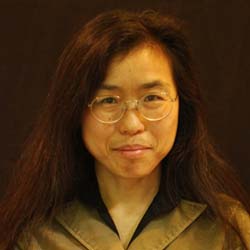
Professor Debbie Leung
Institute for Quantum Computing and
Department of Combinatorics & Optimization,
University of Waterloo, Canada
Title: Non-additivity of quantum channel capacity
Abstract: The best rate for a noisy communication channel to transmit data nearly perfectly is called the capacity. Surprisingly, the capacity for a classical channel to transmit classical data has a simple expression, with consequences such as, there is only one way for a channel to have zero capacity, and there is no capacity gain by coding for two different channels used jointly. This talk will feature notable differences for the quantum setting when we consider the capacity for a quantum channel to transmit quantum data. We will further examine a family of channels called platypus channels displaying super-additivity of quantum capacity when used jointly with a quantum erasure channel, and other forms of superadditivity when used jointly with some generic channels. Our results show that super-additivity is much more prevalent than previously thought. Joint work with Felix Leditzky, Vikesh Siddhu, Graeme Smith, and John Smolin
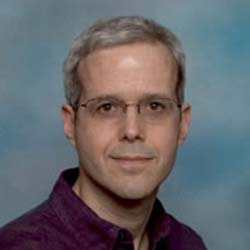
Professor Alon Orlitsky
Information Theory and Applications Center,
University of California San Diego, USA
Title: Towards improving LLM English perplexity
Abstract: Over the past decade there has been a significant effort to improve Large Language Models (LLMs) performance. The fundamental aspect of training LLMs is next-word prediction over a large corpus as measured by the resulting perplexity. Models with lower perplexity consistently improve performance across a variety of downstream tasks including reasoning, coding, and question-answering. In this talk we review existing perplexity-reduction approaches, and show how information-theoretic, syntactical, statistical, and diversification-based techniques may help further reduce the LLM perplexity for the common WikiText-103 benchmark.
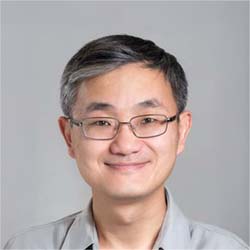
Professor Wei Yu
Electrical and Computer Engineering Department,
University of Toronto, Canada
Title: Surprises in Network Information Theory
Abstract: Information theory aims to characterize the fundamental limits of compressing, representation, and transmission of information in communication networks. For instance, to identify one of N distinct objects, log(N) bits of information are needed. Moreover, the maximum rate of information transmission through a noisy channel is approximately the logarithm of the signal-to-noise ratio. In this talk, we explore several unusual scenarios where information theoretical analyses yield surprising results. We ask the following questions: 1) Is it possible to transmit information through a noisy channel at a strictly positive rate using only infinitesimal amount of transmit power? 2) For transmitting independent messages to a subset of K active devices among a large pool of N devices, is it possible to avoid using an address field of size log(N) bits to identify the intended recipient of each message? The answers to both questions are surprisingly, yes! We discuss the implications of these results to cooperative communications and to massive random access in wireless networking.
Li Chen was awarded his PhD by Newcastle University in U.K. in 2008 and now is a Professor of the School of Electronics and Information Engineering, Sun Yat-sen University (SYSU) in China. From Aug. 2017 to Mar. 2020, he was the Deputy Dean of the School of Electronics and Communication Engineering of SYSU. He specializes in channel coding, in particular, algebraic coding theory and techniques. From Jul. 2015 to Jun. 2016, he took sabbatical visiting both Ulm University in Germany and University of Notre Dame in U.S. He has also visited the Institute of Network Coding, the Chinese University of Hong Kong for several occasions. He founded and chairs the IEEE Information Theory Society Guangzhou Chapter, which was awarded Chapter-of-the-Year by the Society in 2021. He was a member of the IEEE Information Theory Society Board of Governors and chairing the Conference Committee (2022 – 2024). He was awarded The Chinese Information Theory Young Researcher award by the Chinese society of Electronics in 2014. He is an Associate Editor (AE) of the IEEE Transactions on Information Theory, and was an AE of the IEEE Transactions on Communications (2018 – 2023). He has been organizing several international conferences and workshops, including the 2018 IEEE Information Theory Workshop (ITW) in Guangzhou and the 2022 IEEE East Asian School of Information Theory (EASIT) in Shenzhen, for which he was the General Co-chair. He was also the TPC Co-chair of the 2022 IEEE / CIC International Conference on Communications in China (ICCC) in Foshan. He is the General Co-chair of the IEEE International Symposium on Information Theory (ISIT) 2026 in Guangzhou. He likes music and literature.
Debbie Leung has been a Professor at the Institute for Quantum Computing (IQC) and the Department of Combinatorics and Optimization at the University of Waterloo since 2005. Before that, she was a Tolman postdoctoral fellow at the Institute for Quantum Information, California Institute of Technology (Caltech), a program postdoctoral fellow at the Workshop on Quantum Computation 2002, at the Mathematical Sciences Research Institute, Berkeley, and a postdoctoral fellow at the Physics of Information group at the IBM TJ Watson Research Center, 2000-2002. After a BSc in Phys/Math from Caltech in 1995, she did a PhD in Physics at Stanford under the supervision of Professor Yoshihisa Yamamoto and Professor Isaac Chuang. Her research is in the theory of quantum information, focusing on capacities of quantum channels, quantum data compression, entanglement theory, measurement based quantum computation, quantum error correction and fault-tolerant quantum computation.Alon Orlitsky joined the UCSD faculty in 1997. He is the founding director of UCSD’s Information Theory and Applications Center and holds the QUALCOMM Endowed Chair in Information Theory and Its Applications. Before joining UCSD, Orlitsky served two years as a quantitative analyst for D.E. Shaw and Co. From 1986-1996, he was a member of the technical staff at AT&T Bell Labs’ Mathematical Sciences Research Center. Orlitsky received his Ph.D. in Electrical Engineering from Stanford University in 1986, and his M.Sc., also from Stanford, in 1982. He did his undergraduate work in mathematics (B.Sc. 1980) and Electrical Engineering (B.Sc. 1981) at Israel’s Ben-Gurion University. His honors include an ITT International Fellowship in 1982, and an IEEE W.R.G. Baker best-paper award in 1992. Orlitsky co-edited a book on “Theoretical advances in neural computation and learning,” (1994, Kluwer Academic Publishing).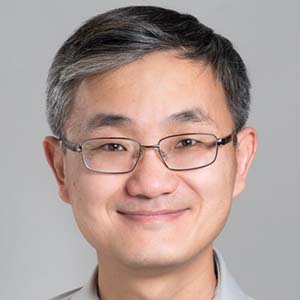 Wei Yu is a Professor and Canada Research Chair in Information Theory and Wireless Communications in the Electrical and Computer Engineering Department at the University of Toronto in Canada. He received the B.A.Sc. degree in computer engineering and mathematics from the University of Waterloo, Canada, and the M.S. and Ph.D. degrees in electrical engineering from Stanford University, U.S.A. Prof. Wei Yu is a Fellow of IEEE and a Fellow of the Canadian Academy of Engineering. He was the recipient of the IEEE Marconi Prize Paper Award in Wireless Communications in 2019, the IEEE Communications Society Award for Advances in Communication in 2019, the IEEE Signal Processing Society Best Paper Award in 2008, 2017, and 2021, and the IEEE Communications Society and Information Theory Society Joint Paper Award in 2024. Prof. Wei Yu served as the President of the IEEE Information Theory Society in 2021. He is a Clarivate Highly Cited Researcher.